
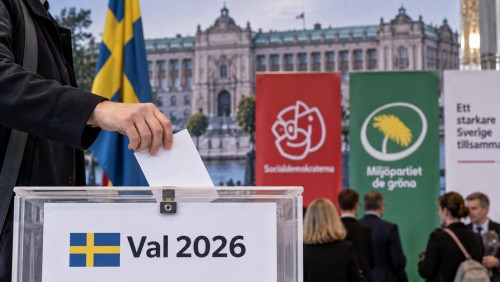
In a closely watched election, Sweden’s political landscape has seen a shift as the red-green opposition coalition emerged as the provisional leader, securing 176 seats in the Riksdag. This preliminary result places them ahead of the ruling Tidö parties, which garnered 173 seats, according to the initial vote count.
The Social Democrats, a significant force in Swedish politics, led the vote share with 28.0%, translating to 99 seats in the parliament. They were followed by the Moderates, who received 19.8% of the vote and captured 70 seats. Meanwhile, the Sweden Democrats came in third with 17.5% of the vote, gaining 62 seats.
The Left Party experienced a notable rise, securing 8.4% of the votes and increasing their parliamentary presence to 30 seats. The Center Party followed with 7.0% and 25 seats. Among other parties, the Christian Democrats and the Green Party each obtained 22 seats, with vote shares of 6.2% and 6.1%, respectively. The Liberals rounded out the main parties with 5.3% of the vote, earning them 19 seats.
Voter engagement in this election was relatively high, with a turnout of 84.8%, slightly surpassing the participation rate from the 2022 election by 0.6 percentage points. Despite the Social Democrats and Sweden Democrats maintaining substantial voter support, both parties saw a decline in their seat counts, losing eight and 11 seats, respectively, compared to the previous election. In contrast, the Left Party experienced a gain of six seats.
As these figures are still subject to the final vote count, which will involve additional verifications, the seat distribution could see adjustments. The outcome underscores a dynamic political environment in Sweden, reflecting shifting voter preferences and the potential for changes in governance.