
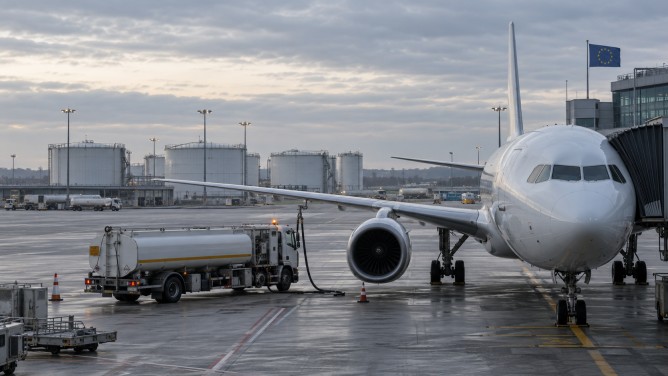
Amid ongoing disruptions in global energy markets, Europe is bracing for a potential shortage of jet fuel in the coming months. Regional stocks have dwindled to critically low levels, despite an uptick in imports from Asia and other international suppliers. Factors contributing to the tightening supply include attacks on energy infrastructure in Saudi Arabia and the broader conflict in the Middle East, which have pushed oil and gas prices higher across Europe.
In a recent report, analysts project that Europe could face a deficit of approximately 510,000 barrels of jet fuel per day during the fourth quarter of this year. This forecast comes as jet fuel reserves in key European hubs—Amsterdam, Rotterdam, and Antwerp—fell to their lowest in seven years by mid-September. The situation raises concerns about the aviation sector’s ability to meet demand as the year progresses.
While the Swedish Energy Agency has assured that supplies of gasoline, diesel, and jet fuel remain stable for now, it acknowledged that short-term supply constraints for aviation fuel could occur in Europe and Sweden. This underscores the precarious balance that energy markets are attempting to maintain in the face of external pressures.
In response to these challenges, Europe has significantly increased its jet fuel imports from Asia, with shipments rising to around 129,000 barrels per day in September. Additional supplies from Canada, Nigeria, and the United States have also been instrumental in mitigating an immediate fuel crisis, but the long-term stability of these imports remains uncertain.
The ongoing geopolitical tensions, particularly those affecting the Middle East, continue to exert pressure on global energy supplies, complicating efforts to stabilize the market. As Europe navigates this complex landscape, the need for strategic management of its energy resources becomes ever more critical.