
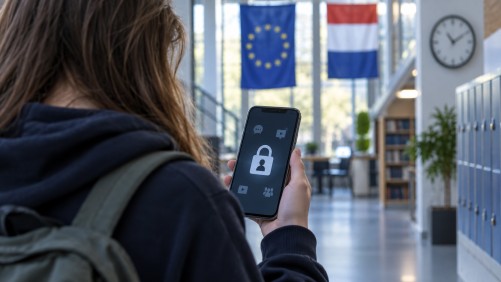
As European nations grapple with the complexities of regulating social media access for minors, the Netherlands has taken a decisive stance by supporting an EU-wide minimum age requirement for social media use. This initiative aligns with broader discussions within the European Union to establish consistent safety measures across member states.
In collaboration with Spain, the Netherlands has submitted proposals to the European Commission advocating for a unified minimum age for social media platforms. The Dutch government is pushing for the age limit to be set at 15, emphasizing the need for privacy-friendly age verification systems. Digital Economy Minister Willemijn Aerdts highlighted the importance of applying the same safety standards online as those that protect children in the physical world.
This move comes amid a growing trend of individual countries implementing their own age restrictions to mitigate the risks faced by minors on social media. For instance, Australia enacted a ban in December 2025, preventing users under 16 from accessing major platforms. Similarly, France has recently restricted social media access for those under 15, and the UK plans to introduce similar measures for under-16s starting in 2027.
Privacy advocates have voiced concerns regarding the implementation of age verification systems. Earlier this year, the European Commission released an age-checking app, which quickly faced scrutiny when a security researcher found a way to bypass it. This prompted the commission to issue a security update, highlighting the challenges involved in enforcing such regulations effectively.
As the European Commission prepares to present proposals on safeguarding children from social media risks, the call for a harmonized approach underscores the need for a coordinated effort across Europe. These discussions are part of a larger digital policy agenda aimed at enhancing online safety standards for young users.