
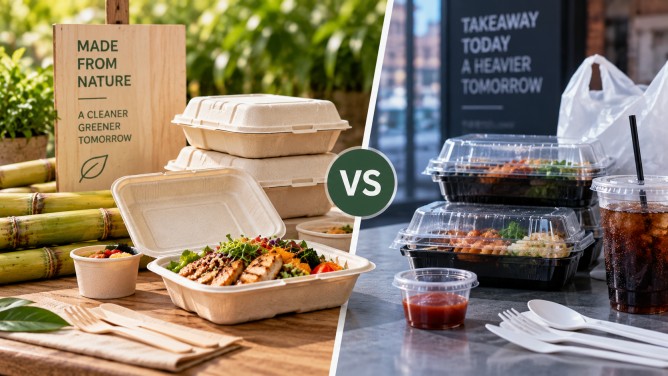
When it comes to choosing between bagasse and plastic food containers for takeout, various factors such as menu type, holding time, sealing needs, market regulations, disposal infrastructure, and packaging costs play a crucial role. Bagasse, derived from sugarcane fibers, is particularly suitable for hot dishes like entrees, rice meals, pasta, catering trays, and meals with compartments. Its fiber-based structure offers rigidity and a professional presentation, while optional barriers can enhance its resistance to grease, moisture, and heat.
Bagasse is also appealing to those aiming for compostability, although it requires a holistic evaluation, considering coatings, laminations, inks, adhesives, and lids. It’s vital to ensure that the local market has the necessary collection and composting facilities to support its sustainable disposal. On the other hand, plastic remains practical for chilled foods, items needing clear visibility, high-moisture products, and budget-focused operations in regions with compatible waste systems.
Rather than assuming one option is superior, it is wise for buyers to assess a plastic SKU against a bagasse alternative. Many businesses might find it more feasible to gradually transition to bagasse rather than replace all plastic containers immediately. For instance, food items like hot, greasy meals require testing for deformation and leakage, while fried foods need examination for condensation and ventilation. Soups and liquid-heavy dishes should be tested as a complete system with lids to ensure efficacy.
There are distinctions among standard, coated, and laminated bagasse products. Additional barriers in coated or laminated bagasse can enhance oil and moisture resistance or improve sealing and temperature performance. Laminated bagasse can include materials like PLA or PET, which may not have the same compostability as unlaminated products. The overall packaging cost involves more than the unit price; factors like carton quantities, freight, storage, lid compatibility, and disposal costs should also be considered.
Grizzlies, with its extensive manufacturing network, offers customized molded-fiber packaging solutions for restaurants and private-label buyers. The company provides various bagasse products such as plates, bowls, trays, and clamshells, along with customization options. Businesses interested in transitioning can share their current container specs and market details with Grizzlies for evaluation and recommendations. Ultimately, choosing bagasse makes sense when its benefits align with specific food applications and market needs, whereas plastic is preferable for transparency and low-cost requirements.
Legal Disclaimer:
The information contained in this article has been provided by independent third-party contributors, clients, or content partners. We do not independently verify the accuracy, completeness, legality, ownership, licensing, or reliability of submitted content, including text, images, videos, trademarks, or other media materials. The submitting party is solely responsible for ensuring that all content, including images and media assets, complies with applicable copyright, trademark, licensing, and intellectual property laws. We disclaim liability for any unauthorized use of copyrighted or proprietary materials by third parties. If you believe that any content published on this platform infringes your intellectual property rights, kindly contact the author above for prompt review and resolution.