
In the immediate aftermath of President Trump’s announcement of a 15% tariff on all US imports, a chorus of experts, advocates, and business leaders rushed to explain who would actually bear the cost. The answer, backed by substantial economic research, is that the primary burden falls not on foreign exporters but on American businesses and consumers — a point that cuts against the administration’s framing of tariffs as a tool to extract concessions from trading partners.
The mechanism is straightforward. When the US imposes a tariff on an imported good, the importer — an American business — pays the duty at the border. That cost is then typically passed on, in whole or in part, to downstream buyers: other businesses or, ultimately, consumers. Studies of the IEEPA tariffs found that approximately 90% of the $130 billion collected was absorbed by US economic actors rather than foreign exporters, who generally maintained their prices and reduced their volumes rather than cutting prices to absorb the tariff.
The distribution of costs within the US economy is also uneven. Industries that rely heavily on imported inputs — electronics, auto manufacturing, retail, construction — face disproportionate cost increases. Lower-income consumers, who spend a higher proportion of their income on goods rather than services, bear a greater relative burden from tariff-driven price increases. The progressivity concerns around broad tariff regimes are well-documented in the academic literature.
The exemptions built into the new 15% tariff provide some relief to specific sectors. Critical minerals, metals, pharmaceuticals, and USMCA-compliant goods from Canada and Mexico are exempt. For industries relying on these inputs, the new tariff’s direct impact is limited. For everyone else, the cost increase is real and will work its way through supply chains over the coming months.
Top US business associations have called for refunds from the IEEPA era — an acknowledgment that the tariff burden has been significant and is widely seen as having been imposed unlawfully. Trump’s suggestion that refunds will require a lengthy legal battle is cold comfort for businesses that have absorbed years of elevated costs. The 15% announcement adds to that burden while the refund question remains unresolved.
Trump Raises Tariffs to 15%: The Complete Breakdown of Who Pays What
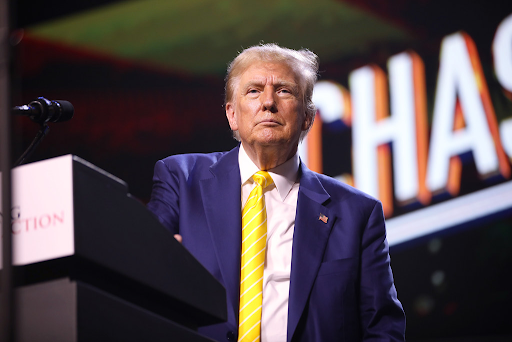
Picture Credit: www.flickr.com
10