
President Donald Trump’s public appeal for allied nations to send warships to the Strait of Hormuz raised a question that military strategists and diplomats were debating urgently on Saturday: could a multinational naval coalition actually reopen a waterway that Iran had closed with missile batteries, naval mines, and the implicit threat of further escalation? Trump named China, France, Japan, South Korea, and the UK as nations he hoped would contribute vessels, framing the effort as a collective defence of global commerce. But analysts noted that the logistics and risks of forcing the strait open by naval power alone were formidable.
The Strait of Hormuz, a narrow passage between Iran and the Arabian Peninsula, carries roughly one-fifth of the world’s daily oil and gas shipments. Iran had closed it since the war began on February 28, sending energy prices surging toward $120 per barrel. Trump had also warned that if Iran continued to block the passage, he would authorise strikes on the country’s remaining oil infrastructure. He said in public remarks that Kharg Island, Iran’s primary crude export hub, had already been effectively demolished by US airstrikes conducted Friday and continued on Saturday.
Iran’s response on Saturday was to demonstrate that it retained the capacity and willingness to strike across the region. Ballistic missiles hit the UAE’s Fujairah emirate, suspending oil-loading operations at a globally critical ship-refuelling port. Iranian commanders threatened to attack any Gulf energy facility with American ties and called on Arab states to expel US forces. The foreign minister argued that the US security presence in the region was destabilising rather than protective. Iran continued firing rockets at Israel as well, keeping multiple fronts active simultaneously.
Israel conducted dozens of airstrikes across Iran, killing at least 15 people in an Isfahan factory. Iran fired back at Israel. US Defence Secretary Pete Hegseth claimed Iran’s leaders were “desperate and hiding” and that the new supreme leader had been wounded. Iranian officials confirmed the injury but called it minor. The International Crisis Group assessed that Iran remained strategically coherent and was pursuing a deliberate plan to survive the bombing, keep fighting, and seek better negotiating terms over time.
The war’s combined toll was enormous. More than 1,400 Iranians had been killed in relentless bombing. Thirteen Israelis and roughly 20 Gulf residents had also died. Lebanon’s crisis deepened, with 800 killed and 850,000 displaced from Israeli strikes on Hezbollah. Six US troops died in an aircraft crash in Iraq. The US embassy in Baghdad was struck by missiles, and Americans across Iraq were ordered to leave. With oil prices rising and no diplomatic channel open, the question of whether any coalition could reopen the Strait of Hormuz without triggering an even wider escalation remained unanswered.
Trump’s Coalition Gambit: Can Allied Warships Reopen the World’s Most Critical Strait?
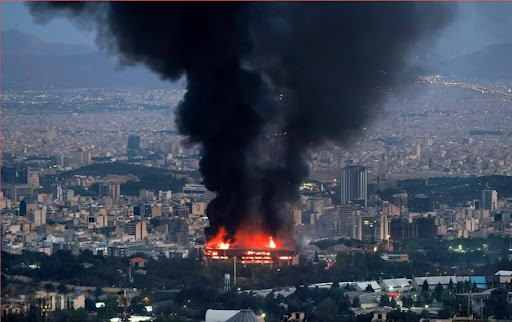
Photo by Mohammad Bornu / Avash Media / Wikimedia Commons (CC BY 4.0)
1