
The journey of oil prices from around $60 a barrel at the start of the year to $100 Thursday illustrates the scale of the supply crisis caused by the Middle East conflict in a way that few other statistics can. The more than 65% price increase over a matter of weeks has left economists, governments, and consumers scrambling to adapt. And with no diplomatic resolution in sight, the risk is that prices could climb further still.
Iranian forces struck merchant vessels near the Strait of Hormuz, including the Thai-registered Mayuree Naree, trapping three crew members. Fuel tanks in Bahrain’s Muharraq Governorate were hit, prompting shelter-in-place orders. Iraq suspended all crude exports after tanker attacks. Oman cleared its Mina Al Fahal terminal after drone strikes hit a neighboring port.
Brent crude rose 9% Thursday to touch $100.29 before settling at $98. West Texas Intermediate gained 8.6% to $94.75. The peak so far this week was $119, representing a dramatic spike before a partial retreat on mixed political signals from Washington. Iran’s military warned of $200 oil.
The IEA and US government combined to release more than 570 million barrels of emergency crude — an extraordinary supply-side intervention. Yet the physical and psychological impact of a closed Strait of Hormuz, shuttered oil ports, and evacuated export terminals continues to dominate market sentiment. Saudi Aramco warned of catastrophic market consequences if the situation persists.
Goldman Sachs raised its Q4 2026 Brent forecast to $71 per barrel. Deutsche Bank warned of stagflation risks. Japan’s Nikkei fell 1.6%, South Korea’s Kospi lost 1.2%, and European gas prices added 7.7%.
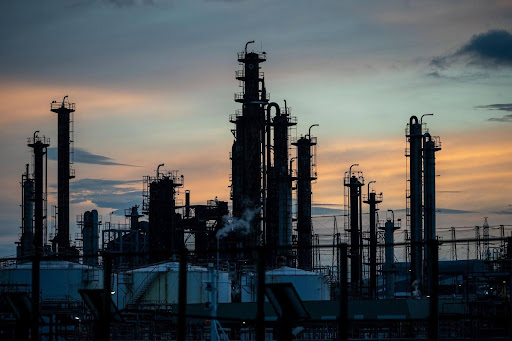
Oil’s Ascent From $60 to $100 Illustrates the Scale of the Middle East Supply Crisis
Picture Credit: www.freepik.com
4